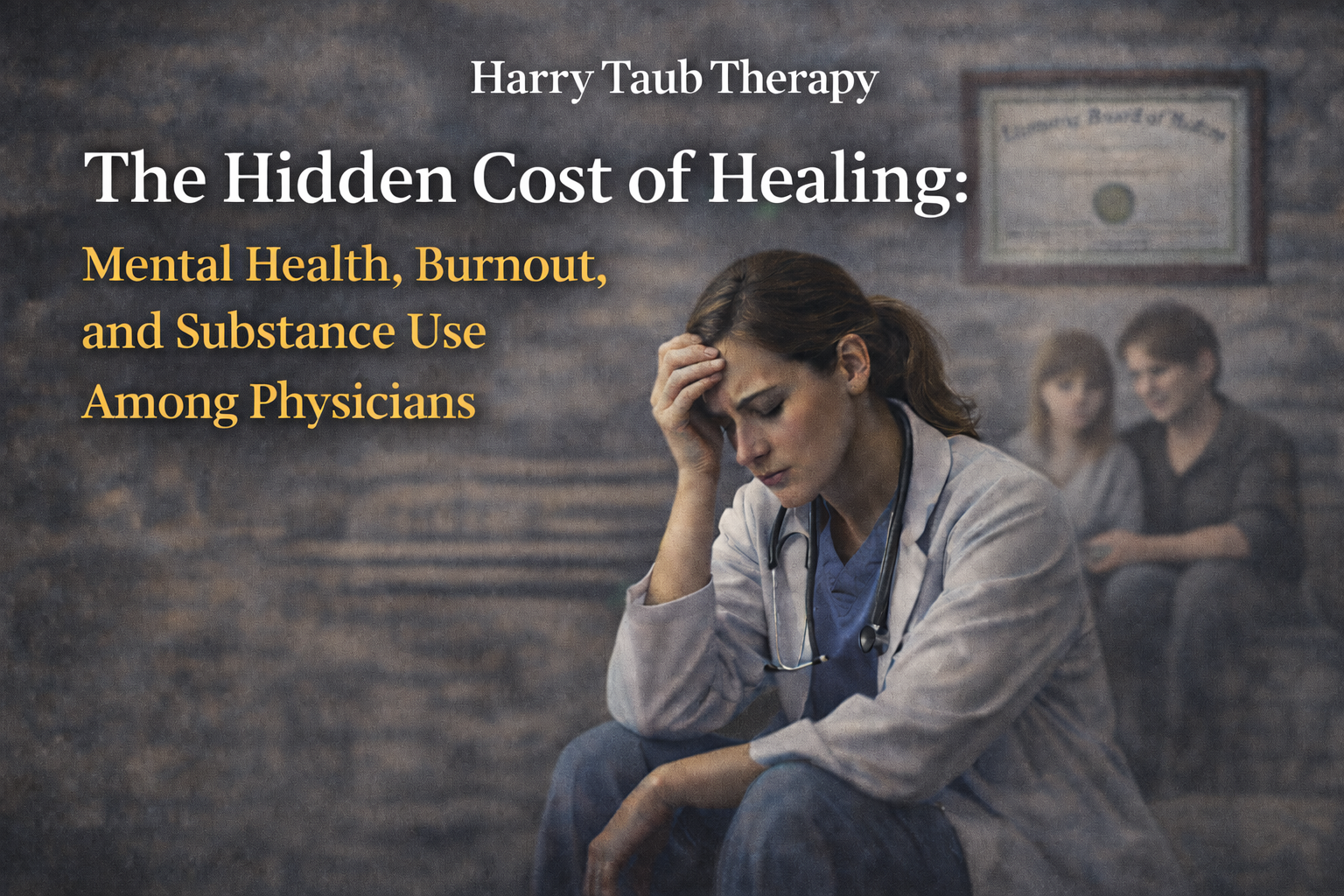
The Hidden Cost of Healing: Mental Health, Burnout, and Substance Use Among Physicians
Licensed professionals — especially physicians — carry enormous responsibility. Long hours, high stakes, and expectations of stoicism and perfectionism place physicians at particular risk for burnout, distress, substance use concerns, and suicide. These challenges can affect not only personal well-being. Other areas of functioning such as work satisfaction, identity, and relationships are also at risk but also career satisfaction, identity as a healer, relationships, and professional functioning.
Burnout and Emotional Distress in Medicine
A substantial body of research shows that physicians experience high rates of burnout and psychological symptoms. Surveys and systematic reviews indicate that burnout — a syndrome characterized by emotional exhaustion, depersonalization, and a reduced sense of personal accomplishment — is widespread among practicing physicians and trainees. Burnout prevalence estimates vary widely by specialty and assessment method, but many physicians report significant symptoms that reflect emotional and occupational strain. (Frontiers)
One study noted burnout rates among physicians ranging from approximately 5% to over 90%, depending on specialty and training status, reflecting the intense and varied pressures in medical practice. (Frontiers)
Similarly, surveys have found that physicians frequently report symptoms of depression and anxiety alongside burnout, and a review of international physician populations suggested that about a quarter to a third report symptoms of mental health concerns at levels warranting clinical attention. (PubMed Central)
More recently, a national study found that nearly half of U.S. physicians surveyed reported at least one symptom of burnout, underscoring that persistent emotional exhaustion remains a common experience. (Stanford Medicine)
Substance Use and Coping
Despite their medical training and awareness of health risks, physicians are not immune to maladaptive coping behaviors. Research indicates that alcohol use disorder and other substance use concerns occur at rates equal to or greater than the general population for physicians and trainees.
For example, surveys have found that among medical trainees and practicing physicians, between male and female physicians alike show notable rates of alcohol use disorder, with some specialties and training environments showing especially elevated prevalence. (AAFP)
These patterns must be understood in context: stress, burnout, depression, and irregular work schedules, among other factors, are all known to increase risk for substance use disorders in the general population, and these stressors are common features of medical practice. (Frontiers)
Suicide Risk in Physicians
Suicide is a leading concern within physician well-being research. While rate estimates vary across countries and study methods, a large retrospective study in the United States found that female physicians have a significantly higher suicide incidence compared with female non-physicians, though male physician suicide risk was lower than that of men in the general population in that sample. (JAMA Network)
Earlier meta-analyses and systematic reviews have also reported evidence of elevated suicide risk among physicians, particularly for female doctors, compared with the general population or other professionals. (BMJ) Additionally, some surveys suggest that many physicians know colleagues who have considered or attempted suicide, reflecting the emotional toll of practice. (The Physicians Foundation)
Depression, burnout, and substance use are all important risk factors for suicidal ideation and behavior. Physicians with depressive symptoms and other mental health concerns are more likely to experience suicidal thoughts, particularly when organizational culture discourages help-seeking and when professionals fear licensing or career consequences for disclosure. (JAMA Network)
Unique Challenges of Physician Identity and Career Pressures
Physicians differ from many other professionals in the degree to which their identity, livelihood, and sense of self are tied to competence, reliability, and “fixing” problems. When emotional distress arises, it may feel like a threat to the core of professional identity, not just a personal health concern.
In many training and practice environments, asking for help is discouraged — implicitly or explicitly — by cultural norms around perfectionism, endurance, and self-sufficiency. These norms may delay early help-seeking and contribute to worsening stress before support is accessed. (AAFP)
Additionally, fear of licensing board scrutiny, malpractice exposure, or professional stigma can make physicians reluctant to seek mental health or substance use support early, even when symptoms are present. These systemic barriers highlight the importance of confidential, non-punitive care options that allow physicians to address distress without risking career disruption.
Opportunities for Growth and Meaningful Support
A period of work disruption, while challenging, can also present an opportunity for deeper reflection. Some physicians find that addressing stress, boundaries, and coping strategies can lead to a more sustainable and fulfilling professional and personal life — not because there was something “wrong” with them, but because medical training and practice often leave little room for this kind of exploration.
Effective support may include:
Confidential assessment and treatment planning
Emotion regulation skills
Burnout recovery and resilience frameworks
Mental health evaluation and treatment
Substance use evaluation when relevant
Finding deeper meaning and authentic identity
Support navigating licensing board
Conclusion
Physicians carry extraordinary responsibility — and research shows that the psychological cost can be significant. Burnout, depression, substance use concerns, and suicide risk are all elevated in physician populations compared with the general public and other professions in many studies. Access to confidential, non-judgmental support, proactive stress management, and cultural change are essential to improving physician well-being.
If you are a physician or healthcare provider feeling overwhelmed, uncertain, or stuck, you are not alone — and early support often makes the most profound difference.